Unit 5: Market launch through social media
1. Introduction to Digital Market Launch
A market launch via social media involves introducing a new product, service, or business to the market using digital platforms. Unlike traditional marketing, social media allows for two-way communication, precise audience targeting, and real-time feedback.
For a successful launch, an entrepreneur must move beyond personal profiles and establish professional Business Assets. This unit covers the technical preparation and strategic presentation of these assets.
2. The Digital Ecosystem Strategy: Hub and Spoke Model
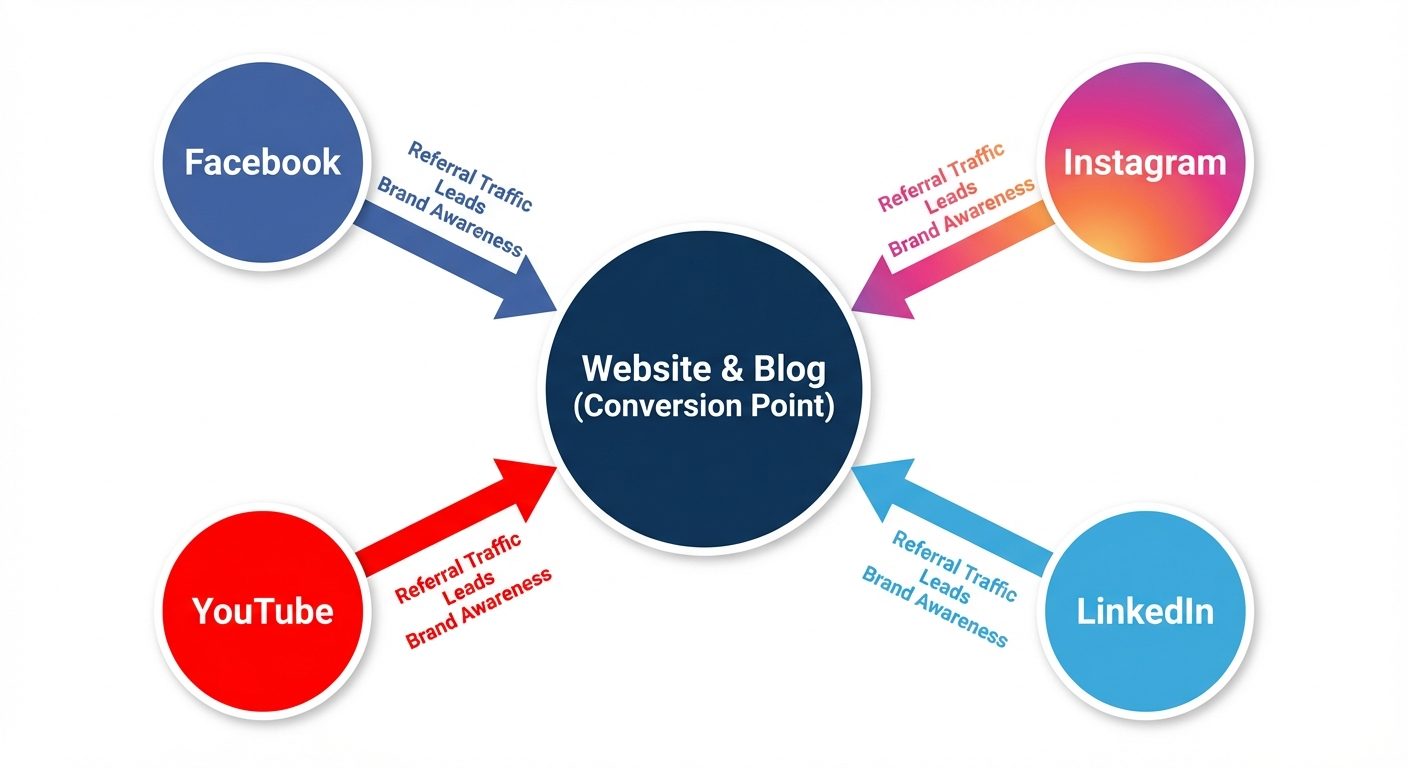
Before creating individual accounts, it is crucial to understand how they interact. The most effective strategy for a market launch is the Hub and Spoke Model.
- The Hub: The Website and Blog (Owned Media). This is where conversions happen (sales, lead generation) and where you have total control over the data.
- The Spokes: Social Media Platforms (Rented Media). These channels (Facebook, Instagram, LinkedIn, YouTube) are used to build awareness and drive traffic back to the Hub.
3. Preparation and Presentation: Facebook Business Page
Facebook remains the largest social media platform, suitable for B2C (Business to Consumer) and creating community groups.
A. Setup Essentials
- Page vs. Profile: Never launch a business using a personal profile. You must create a "Page" to access analytics (Insights), advertising tools, and unlimited followers.
- Category Selection: Choose the most accurate category (e.g., Local Business, Brand, Public Figure) as this aids in local SEO (Search Engine Optimization).
- The Username (Vanity URL): Create a custom URL (e.g.,
facebook.com/YourBrandName) immediately to improve searchability.
B. Visual Presentation
- Profile Picture: usually the company logo. Recommended size: 170x170 pixels (circular crop).
- Cover Photo: The "billboard" of the page. Use this to highlight current promotions or the Value Proposition. Size: 820x312 pixels.
- Call-to-Action (CTA) Button: Configure the blue button under the cover photo to align with business goals (e.g., "Shop Now," "Book Now," "Sign Up," or "Send Message").
C. Content Strategy for Launch
- The 70-20-10 Rule:
- 70% Value: Educational or entertaining content relevant to the audience.
- 20% Shared: Content from other sources or user-generated content.
- 10% Promotional: Direct sales pitches for the launch.
- Meta Business Suite: Use this tool to schedule posts across both Facebook and Instagram simultaneously.
4. Preparation and Presentation: Instagram Business Page
Instagram is a visual-first platform, essential for lifestyle, fashion, food, and product-heavy businesses.
A. Account Configuration
- Switch to Professional Account: Go to Settings > Account > Switch to Professional Account. This unlocks "Insights" (analytics) and the ability to add contact buttons.
- Bio Optimization: You only get 150 characters. It must answer: What do you do? Who is it for?
- Link Strategy: Instagram allows only one clickable link in the bio. Use a "Linktree" or similar landing page tool to direct traffic to multiple destinations (Blog, Shop, YouTube).
B. Visual Strategy (The Grid)
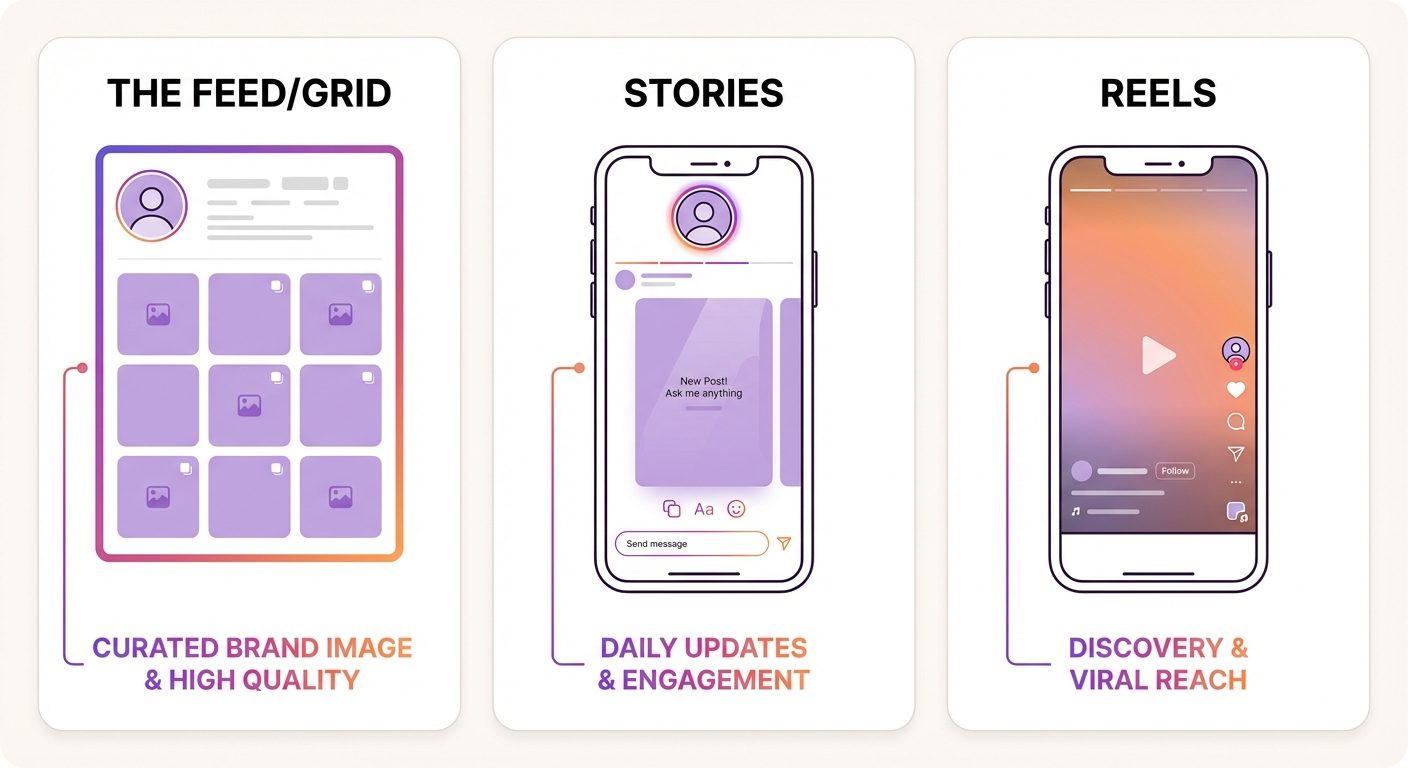
- Aesthetics: Maintain a consistent color palette and filter style. The 9-grid view is the first impression a customer gets.
- Formats:
- Stories: Ephemeral content (24 hours) for behind-the-scenes and polls.
- Reels: Short-form vertical video (high reach/virality potential).
- Carousel: Multiple images in one post (high engagement/saves).
5. Preparation and Presentation: LinkedIn Company Page
LinkedIn is the primary channel for B2B (Business to Business) launches, recruiting, and establishing industry authority.
A. Page Components
- Company Page: Distinct from the founder's personal profile. Includes Logo, Tagline, and Website button.
- The "About" Section: This is indexed by Google. Use industry-relevant keywords in the first 156 characters to improve SEO ranking.
- Specialties: List up to 20 specialties (e.g., "SaaS," "Consulting," "Fintech") to help the algorithm categorize the business.
B. Launch Strategy on LinkedIn
- Thought Leadership: Publish long-form articles via the platform regarding industry trends, not just product features.
- Employee Advocacy: Encourage team members to link their profiles to the Company Page and share launch posts. This expands reach exponentially compared to the page posting alone.
- Document Posts: Upload PDF carousels (slide decks) which perform very well on LinkedIn algorithms.
6. Preparation and Presentation: YouTube Channel
YouTube functions as the world's second-largest search engine (owned by Google). Content here has a long "shelf-life" compared to the fleeting nature of Facebook or Instagram feeds.
A. Channel Elements
- Channel Art (Banner): Must look good on Mobile, Desktop, and TV. It should state the upload schedule (e.g., "New Videos Every Tuesday").
- Channel Trailer: A short video (30-60 seconds) that auto-plays for non-subscribers, explaining the value proposition of the channel.
- Playlists: Organize videos into categories. This increases watch time by auto-playing the next video in the sequence.
B. SEO and Discoverability
- Thumbnails: High-contrast custom images with large text. This is the primary driver of Click-Through Rate (CTR).
- Keywords: Use tools like Google Trends or TubeBuddy to find keywords to include in the Title, Description, and Tags.
- Cards and End Screens: Interactive elements added to the video to link to the Website or other videos.
7. Preparation and Presentation: Website and Blog
The Website is the digital storefront. All social media efforts should ultimately lead here.
A. Website Technicalities
- Domain Name: Must be easy to spell and remember.
- Hosting & CMS: Reliability is key. Common platforms include WordPress (flexible), Shopify (e-commerce), or Wix (beginner-friendly).
- Responsiveness: The site must be mobile-friendly. Google penalizes sites that do not render well on smartphones.
B. Key Pages for Launch
- Home: Clear Value Proposition above the fold (visible without scrolling).
- About Us: Humanizes the brand. Storytelling is key here.
- Products/Services: Detailed descriptions, high-quality images, and pricing.
- Contact: Forms, maps, and email links.
C. The Blog Strategy
- Purpose: To drive organic traffic via SEO.
- Content: Write articles that answer questions customers are asking in search engines.
- Integration: Every blog post should have "Social Share" buttons to encourage readers to post the content to their social networks.
8. The Launch Timeline
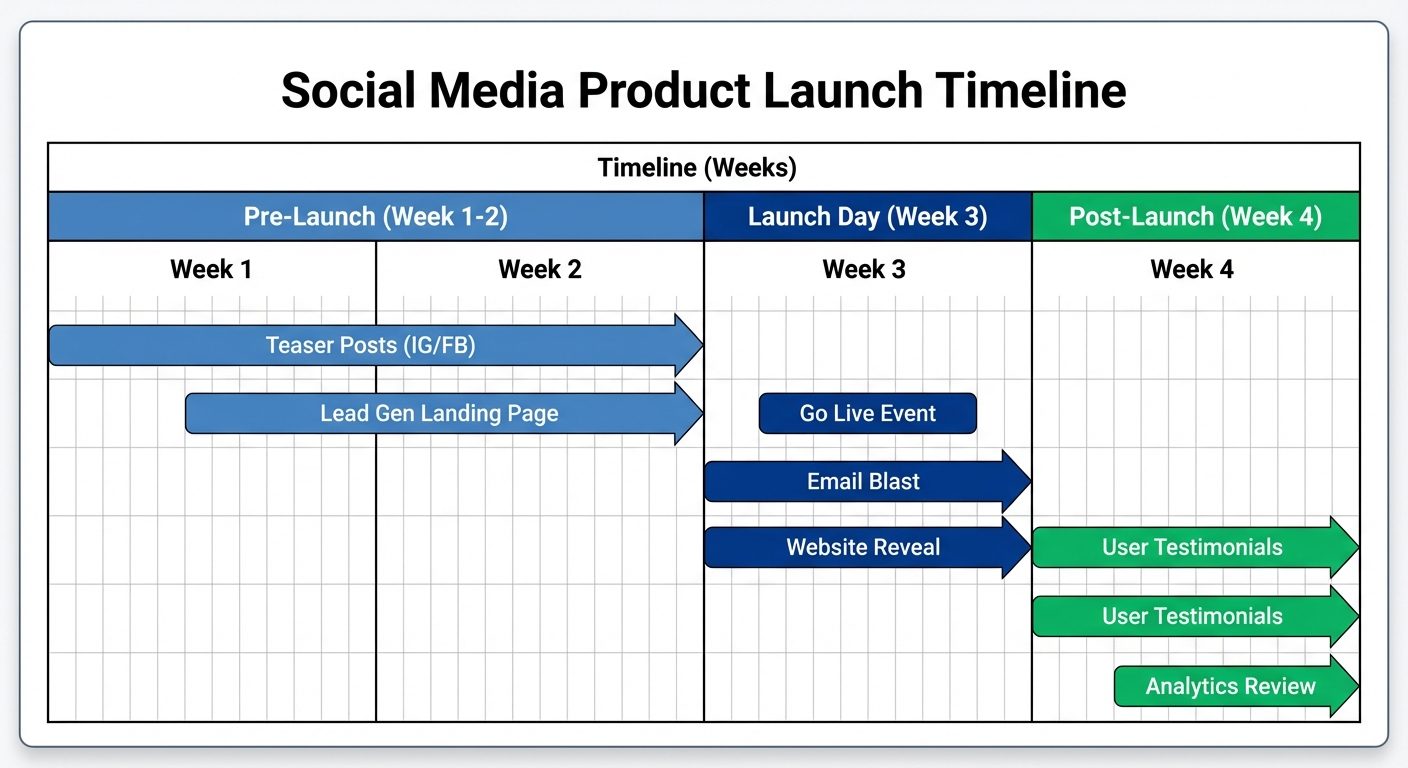
Executing the launch requires coordinating all the above platforms simultaneously.
- Phase 1: Pre-Launch (Tease):
- Social: "Coming Soon" posts, countdowns, behind-the-scenes of product creation.
- Website: Landing page with email capture form ("Notify me when we launch").
- Phase 2: Launch Day (Blitz):
- Social: Go live on Instagram/Facebook. Update all bio links to the live product page. Change cover photos to "Now Open."
- YouTube: Release the official launch trailer.
- Blog: Publish the "Story behind the launch" post.
- Phase 3: Post-Launch (Sustain):
- Social: Share user testimonials and reviews.
- Analytics: Review which platform drove the most traffic and double down on it.
Did this save you a night before the exam?
LPU Notes is free, and it stays free. Ads cover part of the server bill. The rest comes out of a student's own pocket: the domain, the storage, and keeping the site up through the weeks everyone needs it at once.
The payment button didn't load. An ad blocker or a filtered network is the usual reason. to try again.
Nothing here is ever locked, and nothing unlocks. Chip in only if it was worth it. What it pays for →