Unit 1: Vedic maths, Number system, Average
1. Vedic Maths and Fast Calculation Techniques
Vedic Mathematics provides arithmetic shortcuts to increase speed and accuracy in calculations.
1.1 Multiplication Techniques
The Base Method (Nikhilam Sutra)
Used when numbers are close to a power of 10 (10, 100, 1000, etc.).
-
Case 1: Numbers below the base.
- Example: (Base 100)
- Deviation: ,
- Left side: (or )
- Right side:
- Result: 9024
-
Case 2: Numbers above the base.
- Example: (Base 100)
- Deviation: ,
- Left side:
- Right side:
- Result: 10815
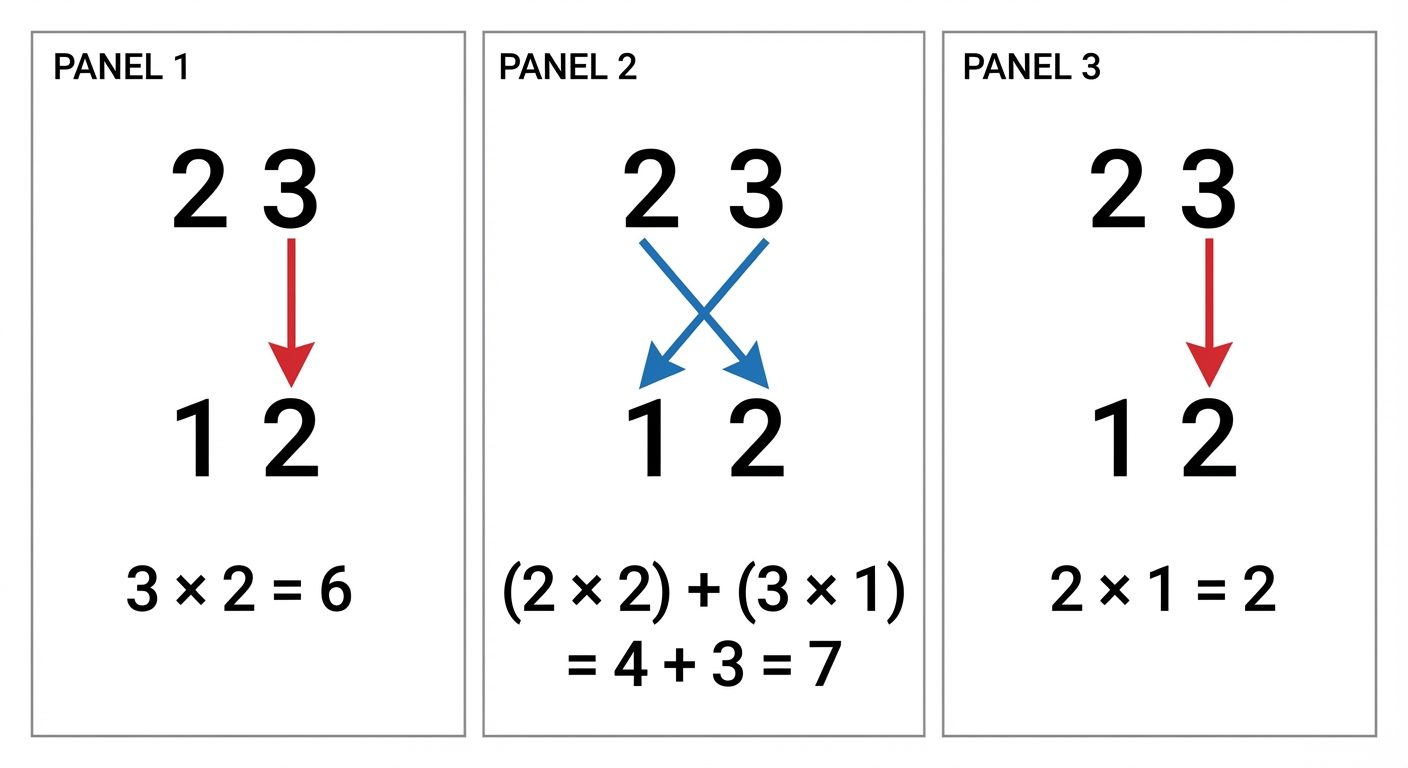
Criss-Cross Method (Urdhva Tiryakbhyam)
A general method for multiplication applicable to any two numbers.
1.2 Squaring Techniques
- Numbers ending in 5:
- Formula: For number , result is .
- Example: , append 25 .
- Numbers near 50:
- Compare with 25.
- Example: . Excess is 4. Result starts with . Ends with . Result: .
- Example: . Deficit is 4. Result starts with . Ends with . Result: .
2. Number System
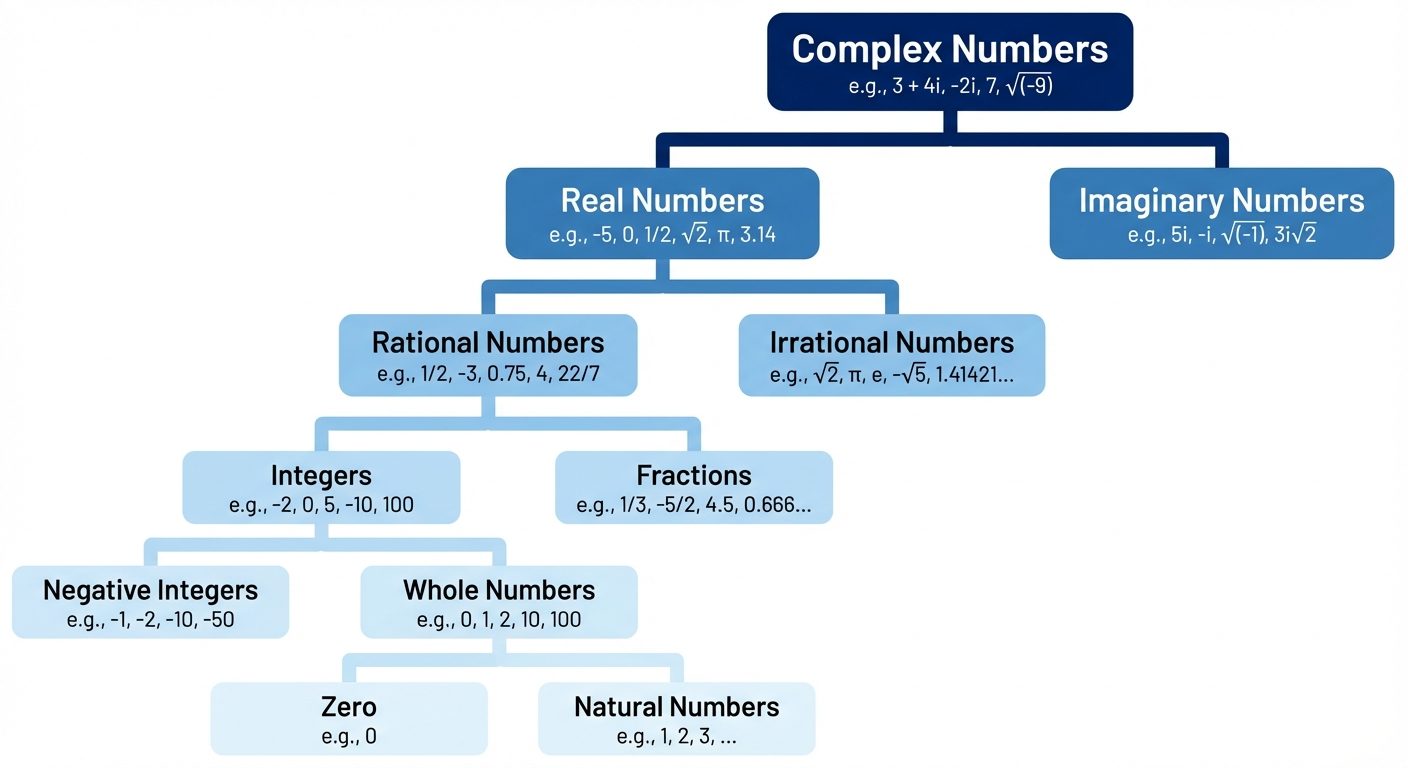
2.1 Classification of Numbers
Understanding the hierarchy of numbers is fundamental to analytical skills.
- Complex Numbers: (Real + Imaginary).
- Real Numbers: All numbers on the number line.
- Rational Numbers: Can be written as where (e.g., 5, 2/3, 0.5).
- Irrational Numbers: Non-terminating, non-recurring decimals (e.g., ).
- Integers:
- Whole Numbers:
- Natural Numbers:
2.2 Divisibility Rules
- 2: Last digit is even (0, 2, 4, 6, 8).
- 3: Sum of digits is divisible by 3.
- 4: Last two digits are divisible by 4.
- 5: Last digit is 0 or 5.
- 6: Divisible by both 2 and 3.
- 8: Last three digits are divisible by 8.
- 9: Sum of digits is divisible by 9.
- 11: Difference between sum of digits at odd places and sum of digits at even places is 0 or divisible by 11.
- Example: 1331 . Divisible.
2.3 Unit Digit Calculation (Cyclicity)
To find the unit digit of , we look at the cyclicity of the base digit.
| Digits | Cyclicity | Cycle Pattern |
|---|---|---|
| 0, 1, 5, 6 | 1 | Same as the number |
| 4, 9 | 2 | 4: (4, 6), 9: (9, 1) |
| 2, 3, 7, 8 | 4 | Calculate |
- Method for Cyclicity 4:
- Divide power by 4.
- Find remainder .
- If , unit digit is base. If , base. If , base.
- If (perfectly divisible), use base.
2.4 Factorials and Trailing Zeros
- Factorial (): Product of first natural numbers. .
- Trailing Zeros: Number of zeros at the end of .
- Count the number of pairs of . Since 5s are rarer than 2s, we count powers of 5.
- Formula: Number of zeros =
2.5 Factors
Let where are prime numbers.
- Total Number of Factors:
- Sum of Factors:
- Number of Prime Factors:
3. Remainder Theorems, HCF & LCM
3.1 Remainder Theorem
- Negative Remainders: Useful for calculation.
- : Remainder is 3 (Positive) or -2 (Negative because ).
- Final answer must always be positive. If calculation yields -2, add divisor: .
3.2 HCF and LCM
- HCF (Highest Common Factor): The largest number that divides two or more numbers exactly. Also called GCD.
- LCM (Least Common Multiple): The smallest number divisible by two or more numbers.
- Relationship: For two numbers and :
- Fractions:
- HCF of fractions =
- LCM of fractions =
4. Average
Average (Arithmetic Mean) is the central value of a set of data.
4.1 Deviation Method (Assumed Mean)
Instead of summing large numbers, assume an average () and find deviations.
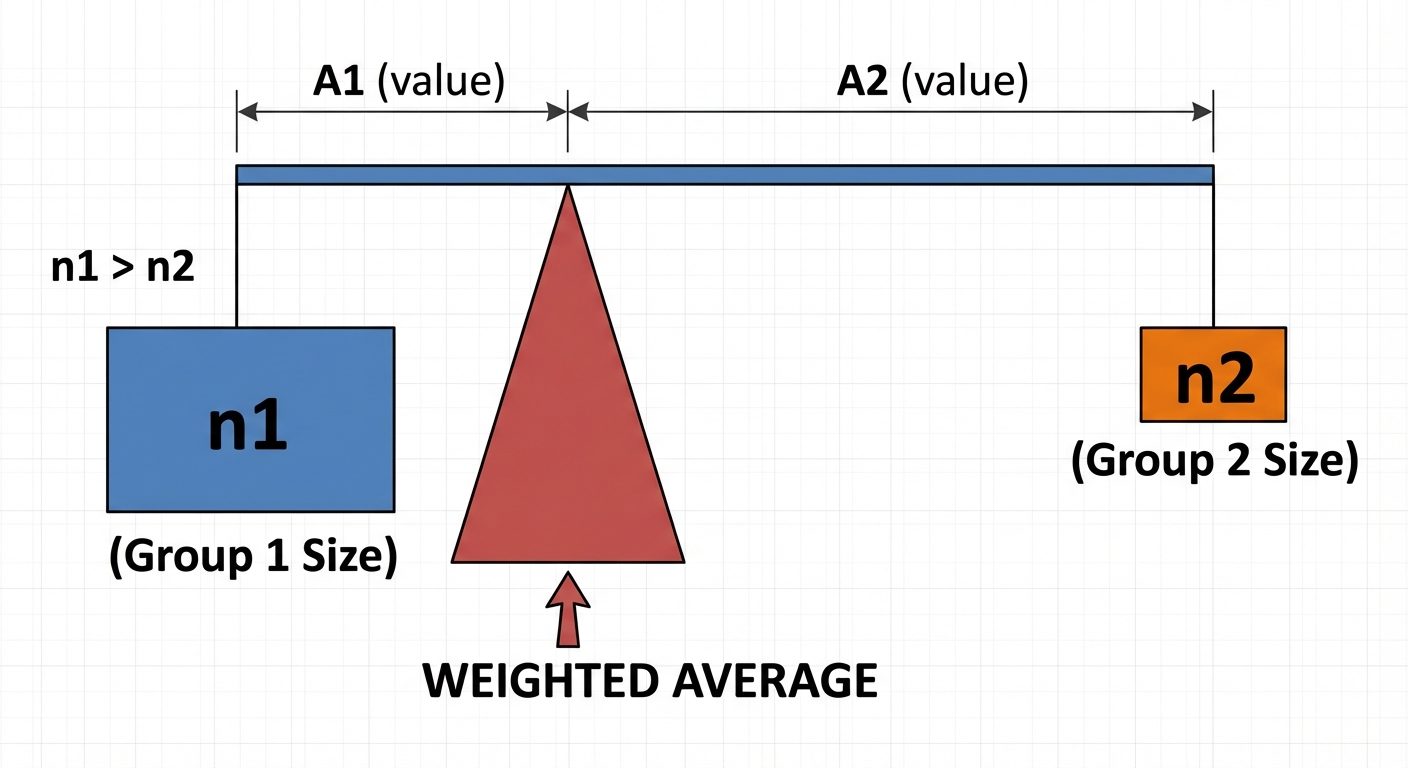
4.2 Weighted Average
Used when groups have different weights or frequencies.
Let group 1 have items with average , and group 2 have items with average .
4.3 Inclusion and Exclusion Principles
Shortcuts for when a person enters or leaves a group.
-
Inclusion (Person Joins):
- If average increases, sign is . If decreases, sign is .
-
Exclusion (Person Leaves):
- Note: Pay close attention to signs. If the person leaving caused the average to drop, they must have been heavier/older than the average.
-
Replacement:
Did this save you a night before the exam?
LPU Notes is free, and it stays free. Ads cover part of the server bill. The rest comes out of a student's own pocket: the domain, the storage, and keeping the site up through the weeks everyone needs it at once.
The payment button didn't load. An ad blocker or a filtered network is the usual reason. to try again.
Nothing here is ever locked, and nothing unlocks. Chip in only if it was worth it. What it pays for →