Unit 1: Introduction and Sustainable Development
1. Introduction to Environment
The term "Environment" is derived from the French word "Environner", which means "to encircle" or "to surround." In a broad sense, the environment refers to the sum total of all conditions and influences that affect the development and life of organisms.
Definition
The environment is defined as the sum total of water, air, and land and the interrelationships that exist among them and with the human beings, other living organisms, and materials.
Components of Environment
The environment consists of two major components:
- Abiotic (Non-living) Factors:
- Physical factors: Temperature, light, rainfall, humidity, wind.
- Chemical factors: Soil composition, pH, atmospheric gases, minerals.
- Inorganic substances: Water, oxygen, carbon dioxide, nitrogen.
- Biotic (Living) Factors:
- Producers (Autotrophs): Green plants that synthesize food (photosynthesis).
- Consumers (Heterotrophs): Animals that depend on plants or other animals (Herbivores, Carnivores, Omnivores).
- Decomposers (Saprotrophs): Microorganisms (bacteria, fungi) that break down dead organic matter.
2. Spheres of the Earth
The earth’s environment is divided into four distinct but interacting segments (spheres).
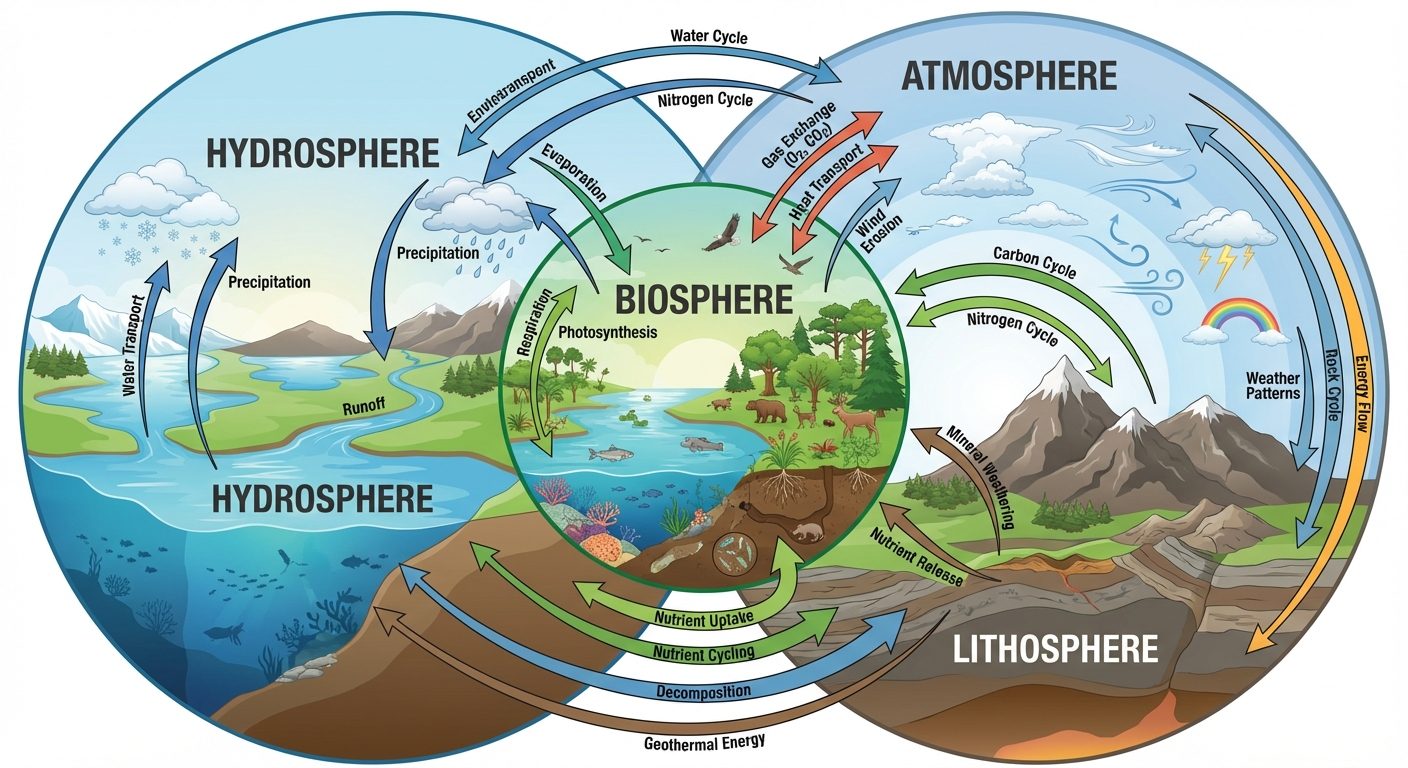
1. Lithosphere (Solid Earth)
- The rigid, outer part of the earth, consisting of the crust and upper mantle.
- Contains soil, rocks, and minerals necessary for life.
- The soil provides the platform for plant growth and is the terrestrial habitat for humans and animals.
2. Hydrosphere (Water)
- Comprises all water resources on earth: oceans, seas, rivers, lakes, ice caps, and groundwater.
- Covering approximately 71% of the earth's surface.
- Crucial for hydrological cycles and maintaining body temperature in organisms.
3. Atmosphere (Air)
- The protective blanket of gases surrounding the earth.
- Composition: Nitrogen (78%), Oxygen (21%), Argon (0.9%), Carbon Dioxide (0.04%), and trace gases.
- Functions: Protects life from harmful UV radiation (Ozone layer), regulates temperature, and provides oxygen for respiration.
4. Biosphere (Life)
- The narrow zone where the Lithosphere, Hydrosphere, and Atmosphere interact to support life.
- It extends from the deepest ocean trenches to the highest mountain peaks where life is found.
3. Multidisciplinary Nature of Environmental Studies
Environmental studies is not a single subject but a convergence of many disciplines. It deals with every issue that affects an organism.
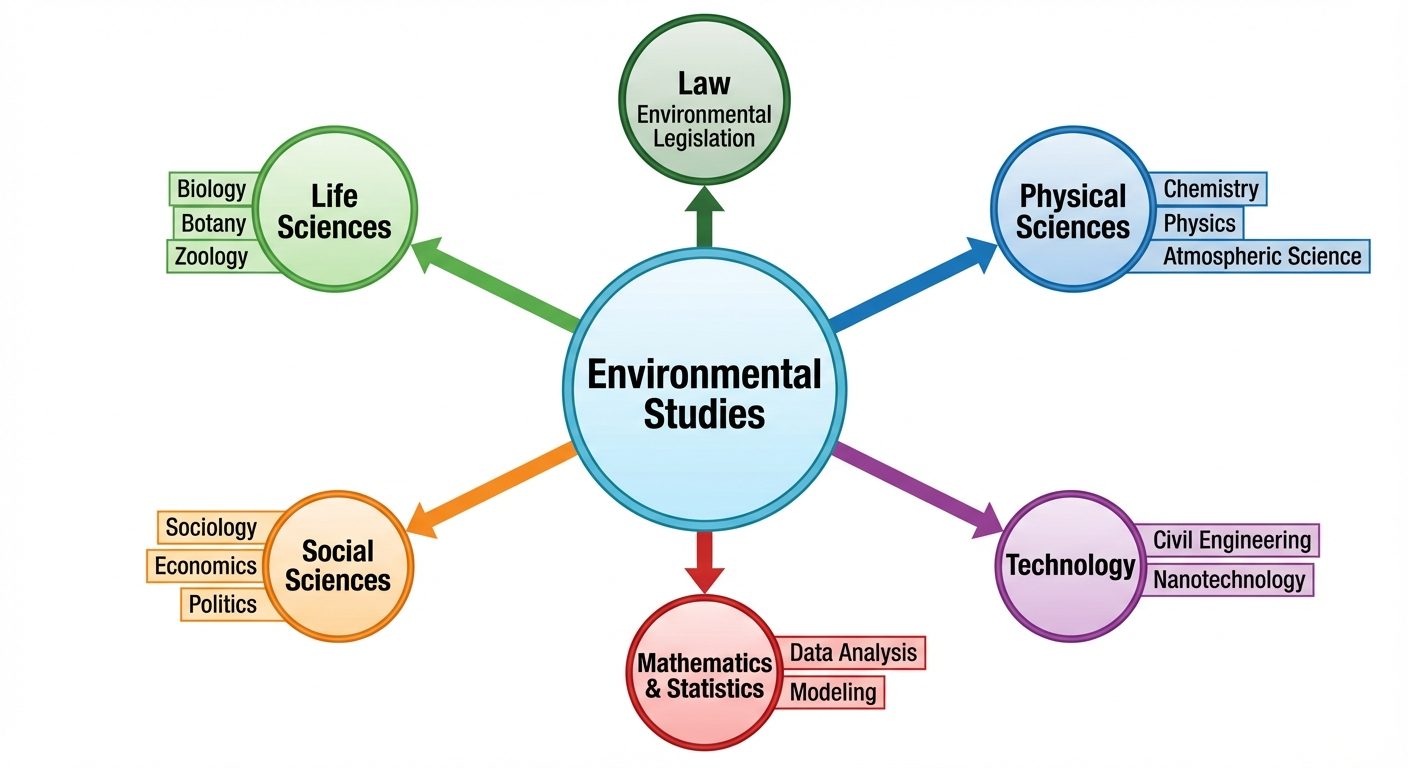
- Biological Sciences: Botany, Zoology, Microbiology (Study of biotic components).
- Physical Sciences: Physics, Chemistry (Thermodynamics, chemical composition of pollutants).
- Mathematics & Computer Science: Modeling climate change, statistical data analysis of populations.
- Sociology: Impact of environment on social groups, displacement due to dams/disasters.
- Economics: Cost-benefit analysis of projects, green economy, carbon trading.
- Law: Environmental protection acts, pollution control regulations.
- Engineering: Waste management technologies, renewable energy systems.
4. Scope and Importance
Scope
The scope of environmental studies is vast and covers:
- Natural Resources: Conservation and management of forest, water, and mineral resources.
- Ecology and Biodiversity: Study of ecosystems and protecting endangered species.
- Environmental Pollution: Control and remediation of air, water, soil, and noise pollution.
- Social Issues: Human population, health, and ethics regarding the environment.
Importance
- Survival: Essential to understand climate change and resource depletion for human survival.
- Public Awareness: Educating the public about hygiene, sanitation, and pollution.
- Sustainable Living: shifting from "use and throw" culture to conservation.
- Legal Necessity: Understanding laws is required for industries and development planning.
5. Concept of Sustainability & Sustainable Development
Concept of Sustainability
Sustainability is the capacity to endure. In ecology, it describes how biological systems remain diverse and productive indefinitely. In a human context, it refers to the long-term maintenance of responsibility, which has environmental, economic, and social dimensions.
Sustainable Development
Definition (Brundtland Commission, 1987):
"Sustainable development is development that meets the needs of the present without compromising the ability of future generations to meet their own needs."
Key Principles:
- Inter-generational equity (fairness between generations).
- Intra-generational equity (fairness within the current generation).
- Conservation of natural resources.
- Appropriate technology usage.
Carrying Capacity
Carrying capacity is the maximum population size of a biological species that can be sustained in that specific environment, given the food, habitat, water, and other resources available.
- Biocapacity: The planet's biologically productive land and sea area.
- Ecological Footprint: The measure of human demand on nature.
- Sustainability condition: Ecological Footprint Carrying Capacity.
6. Pillars of Sustainability
Sustainability is often visualized as three intersecting pillars (The Triple Bottom Line).
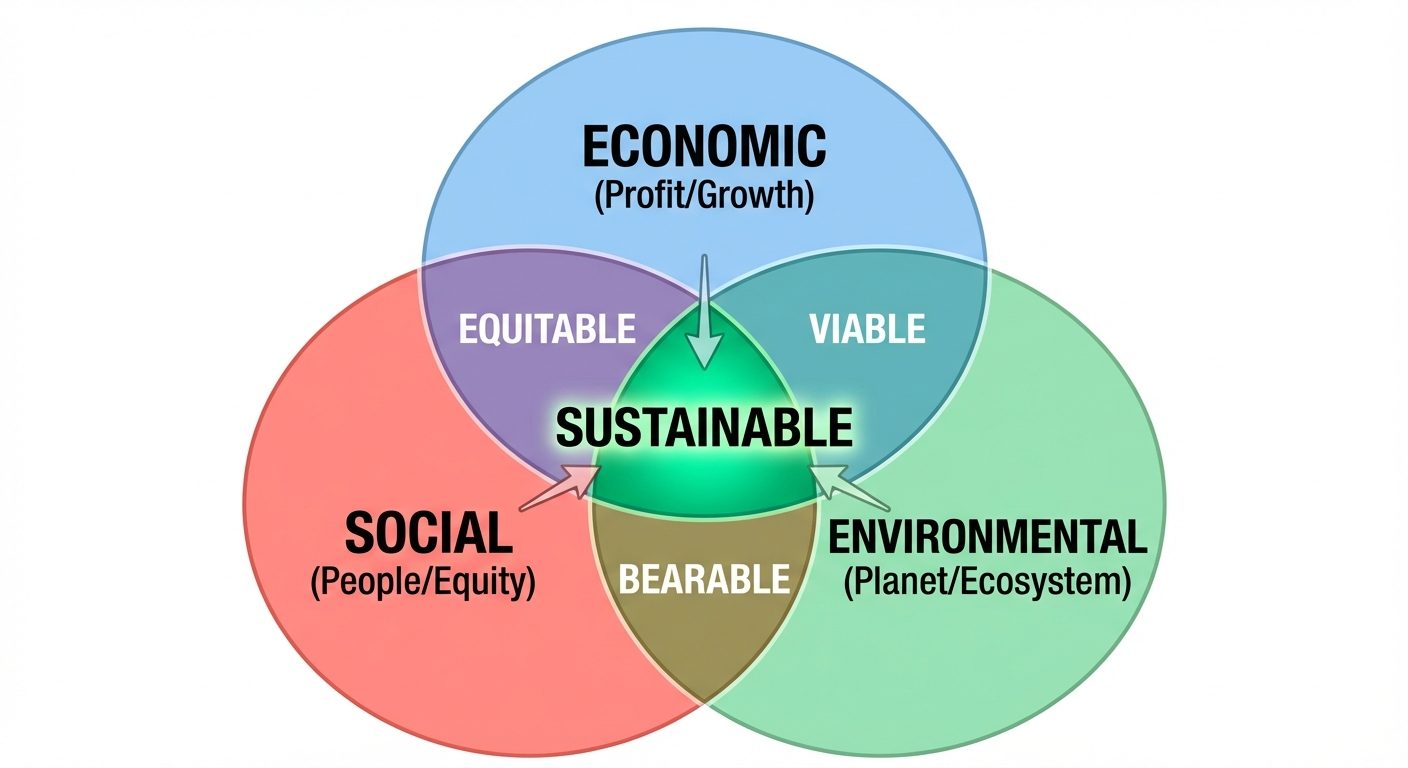
- Environmental Pillar (Planet):
- Focuses on ecosystem integrity and carrying capacity.
- Goals: Zero pollution, renewable energy, biodiversity conservation.
- Social Pillar (People):
- Focuses on equity, health, and social justice.
- Goals: Human rights, labor laws, fair wages, education access.
- Economic Pillar (Profit):
- Focuses on economic growth without negatively impacting the other two pillars.
- Goals: Profitability, cost savings through efficiency, circular economy.
7. Sustainable Development Goals (SDGs)
The SDGs, also known as the Global Goals, were adopted by the United Nations in 2015 as a universal call to action to end poverty, protect the planet, and ensure that by 2030 all people enjoy peace and prosperity.
There are 17 Goals categorized generally into the 5 Ps: People, Planet, Prosperity, Peace, and Partnership.
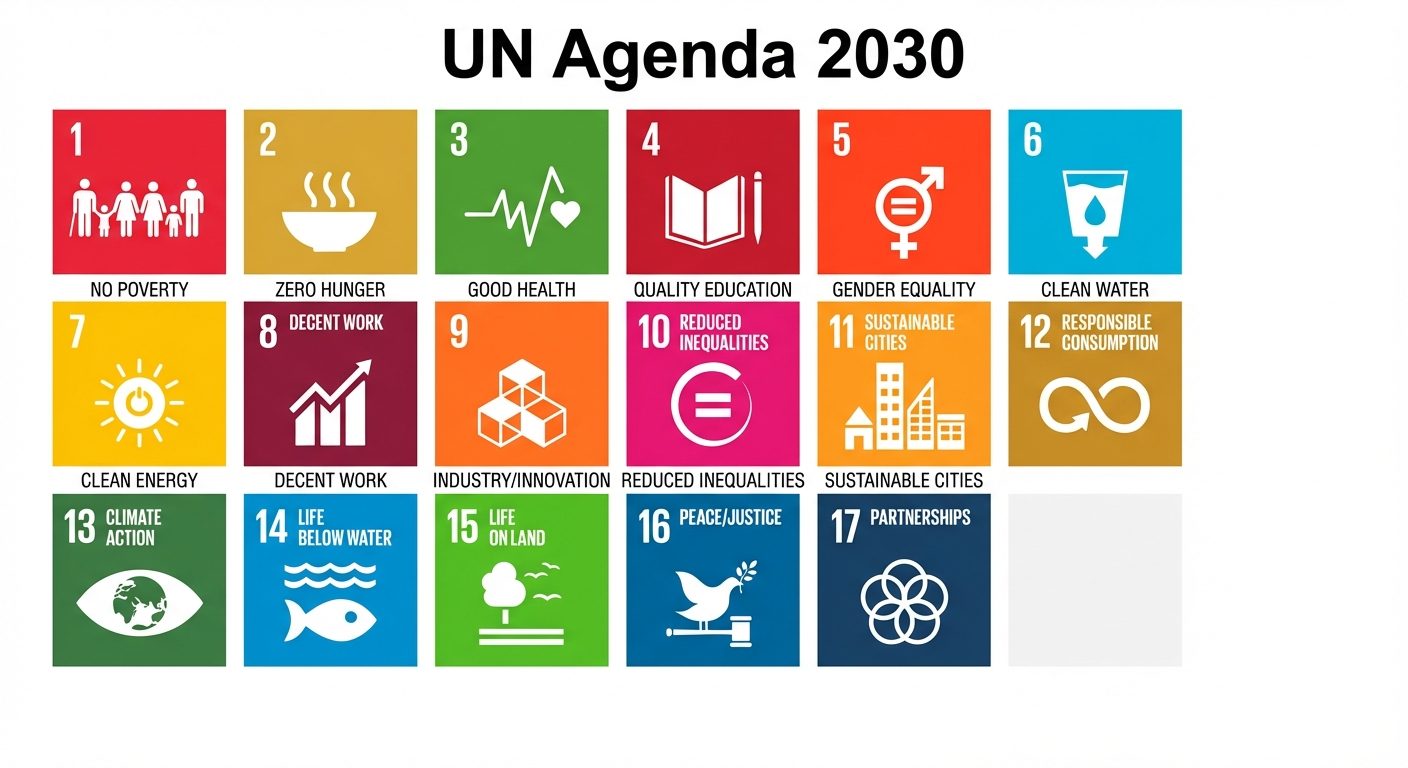
List of the 17 SDGs:
- No Poverty: End poverty in all its forms everywhere.
- Zero Hunger: End hunger, achieve food security, and promote sustainable agriculture.
- Good Health and Well-being: Ensure healthy lives at all ages.
- Quality Education: Inclusive and equitable quality education.
- Gender Equality: Empower all women and girls.
- Clean Water and Sanitation: Availability and sustainable management of water.
- Affordable and Clean Energy: Access to affordable, reliable, sustainable energy.
- Decent Work and Economic Growth: Sustained, inclusive economic growth.
- Industry, Innovation, and Infrastructure: Resilient infrastructure and innovation.
- Reduced Inequalities: Reduce inequality within and among countries.
- Sustainable Cities and Communities: Make cities safe, resilient, and sustainable.
- Responsible Consumption and Production: Sustainable consumption patterns.
- Climate Action: Urgent action to combat climate change.
- Life Below Water: Conserve oceans and marine resources.
- Life on Land: Protect terrestrial ecosystems and biodiversity.
- Peace, Justice, and Strong Institutions: Promote peaceful and inclusive societies.
- Partnerships for the Goals: Strengthen the global partnership for sustainable development.
Did this save you a night before the exam?
LPU Notes is free, and it stays free. Ads cover part of the server bill. The rest comes out of a student's own pocket: the domain, the storage, and keeping the site up through the weeks everyone needs it at once.
The payment button didn't load. An ad blocker or a filtered network is the usual reason. to try again.
Nothing here is ever locked, and nothing unlocks. Chip in only if it was worth it. What it pays for →